Hey there! I’m a supplier in the communication towers business, and I often get asked how these tall structures communicate with each other. It’s a pretty fascinating topic, so I thought I’d break it down for you in this blog. Communication Towers

The Basics of Communication Towers
First off, let’s talk a bit about what communication towers are. They’re basically tall structures that are used to transmit and receive signals for various types of communication, like mobile phones, radio, and TV. You’ve probably seen them around, those big metal poles with all sorts of antennas on top.
These towers are super important because they help us stay connected. Without them, our phones wouldn’t work, and we wouldn’t be able to watch our favorite shows on TV. They’re like the backbone of our modern communication systems.
How They Communicate: The Signals
So, how do these towers talk to each other? Well, it all comes down to signals. Communication towers use electromagnetic signals to send and receive information. These signals are a form of energy that can travel through the air, kind of like how light travels.
There are different types of signals that towers use. For mobile phones, they usually use radio frequency (RF) signals. These signals are in a specific range of frequencies that are designed to work well for mobile communication. The towers send out these RF signals, which are then picked up by our phones. And when we make a call or send a text, our phones send signals back to the towers.
The Role of Antennas
Antennas are a crucial part of how communication towers communicate. They’re the things on top of the towers that look like little sticks or dishes. Antennas are designed to send and receive signals.
There are different types of antennas, and each one is used for a specific purpose. For example, some antennas are used for sending signals over long distances, while others are used for more local communication. The shape and size of the antenna can also affect how well it works.
When a tower wants to send a signal, the antenna converts electrical energy into electromagnetic energy, which is then sent out into the air. And when it wants to receive a signal, the antenna does the opposite, converting the electromagnetic energy back into electrical energy.
Backhaul: Connecting the Towers
Now, just sending signals between a tower and our phones isn’t enough. The towers also need to communicate with each other to make sure that our calls and messages can reach their destinations. This is where backhaul comes in.
Backhaul is the process of connecting communication towers to each other and to the main network. There are a few different ways to do this. One common method is to use fiber optic cables. These cables are made of thin strands of glass or plastic that can carry large amounts of data very quickly.
Another method is to use microwave links. Microwave links use high – frequency radio waves to send data between towers. They’re a bit like the RF signals used for mobile phones, but they operate at a higher frequency and can carry more data.
Network Architecture
The way communication towers are set up in a network also plays a big role in how they communicate. There are different types of network architectures, but one of the most common is the cellular network.
In a cellular network, the area is divided into small regions called cells. Each cell has its own communication tower. When you move from one cell to another, your phone automatically switches to the tower in the new cell. This is called handoff.
The towers in a cellular network are connected to a base station controller (BSC). The BSC manages the communication between the towers and the main network. It also helps with things like call routing and handoff.
Challenges in Tower Communication
Of course, there are some challenges when it comes to communication towers communicating with each other. One of the biggest challenges is interference. Interference can come from a lot of different sources, like other electronic devices or even the weather.
For example, thunderstorms can cause radio interference, which can disrupt the signals between towers. And if there are a lot of electronic devices in an area, they can also cause interference.
Another challenge is the distance between towers. The farther apart the towers are, the weaker the signals can get. This means that towers need to be placed strategically to make sure that they can communicate effectively.
The Future of Tower Communication
The future of communication towers is looking pretty exciting. With the development of 5G technology, communication towers are going to play an even more important role. 5G uses higher frequencies than previous generations of mobile technology, which means that more towers will be needed to provide coverage.
These new towers will also be able to communicate with each other even more efficiently. They’ll be able to handle more data and provide faster speeds. And as technology continues to develop, we can expect to see even more improvements in how communication towers communicate.
Why Choose Our Communication Towers
If you’re in the market for communication towers, you might be wondering why you should choose our products. Well, we’ve been in the business for a long time, and we know what it takes to make high – quality towers.
Our towers are made from the best materials, which means they’re strong and durable. They’re also designed to be easy to install and maintain. And we offer a wide range of towers to suit different needs, whether you’re looking for a small tower for a local area or a large tower for a wide – coverage network.
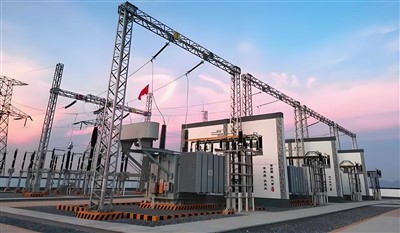
We also have a great team of experts who can help you with everything from choosing the right tower to setting it up. We understand that communication is important, and we’re committed to providing the best products and services to our customers.
Monitoring Tower If you’re interested in learning more about our communication towers or if you have any questions, don’t hesitate to get in touch. We’d love to have a chat with you and see how we can help you with your communication needs. Whether you’re a small business looking to improve your local communication or a large corporation in need of a wide – scale network, we’ve got you covered.
References
- "Telecommunication Tower Engineering" by H. H. E. Leipold
- "Cellular Communication Systems" by D. Black
- "RF and Microwave Communication Circuits" by R. K. Gupta
Hebei Yifeng Steel Structure Co., Ltd.
As one of the most professional communication towers manufacturers and suppliers in China, we offer a wide range of products with superior quality. Please feel free to buy cost-efficient communication towers for sale here from our factory. Contact us for more details.
Address: Guangchuan Town Industrial Zone, Jing County, Hengshui City, Hebei Province
E-mail: hbyfgjg@163.com
WebSite: https://www.yf-powertowers.com/
