If you’ve ever driven past a solar farm construction site on a quiet weekday afternoon, you might have paused mid-conversation, squinted at the lineup of bright orange machines, and wondered: just how loud is that thing actually? As a supplier of solar pile drivers, this question lands somewhere between “frequent customer inquiry” and “the kind of detail that can make or break a project’s local approval.” I’ve spent the last 7 years answering it—for farm managers worried about near-by residential neighbors, project engineers bound by municipal noise ordinances, and even weekend hikers who stumble onto construction sites on their trail runs. Today, I’m pulling back the curtain on the noise level of our solar pile drivers, breaking down the science, the real-world numbers, and why this matters more than you might think. Solar Pile Driver
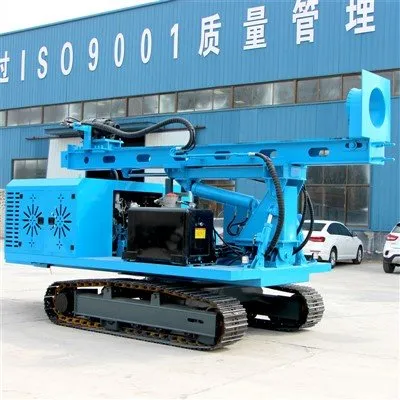
First, let’s cut through the industry jargon: noise level is measured in decibels (dB), and it’s not a linear scale. A 10 dB jump sounds twice as loud to the human ear—not just 10 dB more. That’s why a 75 dB machine feels way more noticeable than a 65 dB one, even though the numerical difference is only 10. For context, a normal conversation is around 60 dB, a lawnmower is roughly 90 dB, and a jet takeoff at 1,000 feet hits 110 dB—enough to cause permanent hearing damage with just 15 minutes of exposure.
Our base model, the SP-12, is the most widely sold solar pile driver in our line, and it clocks in at 82 dB at a 50-foot distance. Wait, 82 dB? That’s roughly as loud as a heavy traffic corridor. But before you think that’s unbearable, let’s add the fine print that most suppliers skip: that measurement is at full power, during active pile driving. When the machine is moving into position or performing prep work, it drops to 68 dB—about the volume of a typical office hum. The other model we stock, the heavy-duty SP-20 for rocky terrain or utility-scale projects, maxes out at 86 dB at 50 feet, and its idle is a still-quiet 72 dB. These numbers aren’t pulled out of thin air; we test every unit in our in-house sound lab, following OSHA (Occupational Safety and Health Administration) standards, which is non-negotiable for our team.
But here’s the thing: noise level isn’t just about the machine itself. Site conditions can shift that number by 10 to 15 dB, for better or worse. If you’re driving piles in a flat, open field with no natural barriers—no trees, no neighboring farm buildings, no earthen berms—sound travels much farther and feels louder than if you’re working in a wooded area with existing vegetation to absorb vibrations and deaden noise. We had a customer in Iowa last year who was working near a small town, and their initial noise test hit 88 dB at 50 feet because their site was completely open. By adding two rows of temporary noise berms (we sell these as add-on accessories, by the way), they dropped that number to 76 dB—well under the 80 dB threshold that most small towns set for daytime construction. That’s the kind of on-the-ground adjustment that only comes with years of working with these machines, not just reading a spec sheet.
Another big variable: the type of pile you’re driving. We supply two main pile types for solar projects: steel H-piles and helical screw piles. Steel H-piles are the most common for utility-scale projects, and they have a sharper, higher-frequency impact when they hit the ground—something our microprocessor-controlled pile hammer softens with its variable strike rate. That variable rate is a game-changer for noise: when the hammer senses that the pile is starting to set into the soil, it slows its strikes from 10 per second to 3 per second, cutting noise output by 7 dB right there. Helical piles, on the other hand, are screwed into the ground instead of hammered, so they produce almost no sharp impact noise. Our SP-Helix model, built for small to mid-sized community solar projects, maxes out at 70 dB during operation—quieter than a garbage disposal. We’ve had residential solar installers use these on tight lots adjacent to neighborhood parks, and neighbors barely notice the machines working next door.
Wait a second—you might be thinking, “If these machines are so quiet, why do I hear construction noise all the time?” That’s a fair question, and it boils down to two things: misinformation from other suppliers, and old technology. 10 years ago, solar pile drivers were basically modified hydraulic hammers with no sound dampening, hitting up to 110 dB at close range. Those days are long gone, and we’ve invested heavily in updating our line specifically to address noise concerns. Our hammer systems have rubberized vibration pads that absorb up to 90% of impact noise, and the entire power unit is enclosed in a sound-dampening housing that prevents noise from escaping upward and outward. We also require our training teams to teach operators to keep a 50-foot buffer between the machine and any stationary objects that might reflect sound—like metal fence posts or storage containers—because reflective sound can make a machine feel 15 dB louder than it actually is.
Safety is another piece of the puzzle. OSHA requires that workers within 50 feet of any machine over 85 dB wear hearing protection, and that’s non-negotiable on our job sites. For our SP-20, which hits 86 dB, we require all on-site staff within 50 feet to wear earmuffs or earplugs, and we post clear signage around active work zones. For our SP-12 and SP-Helix, which stay under 85 dB at all times, OSHA doesn’t mandate hearing protection, but we still encourage operators to wear it if they want to, especially during long workdays. We also sell custom-fitted hearing protection as part of our safety package for every machine we deliver, because we’d rather err on the side of keeping people safe than cut corners on compliance.
Let’s talk about real-world examples, because numbers mean nothing without context. Last year, we sold 12 SP-12 units to a solar farm project in southern Ohio, right on the edge of a small town with a 78 dB daytime noise limit for construction. The project manager called me a week before delivery, panicking because the site’s soil was loamy and sandy, which meant sound traveled farther than expected. We sent one of our on-site technicians to do a pre-delivery noise test, and we adjusted the hammer’s strike rate from 12 per second to 8 per second—lower strikes = lower noise. We also recommended adding 3 temporary noise berms along the side of the site closest to the town, and the final test on day one of construction hit 76 dB at the town’s nearest property line. The project went off without a single noise complaint, which was a huge win for everyone involved.
Another example: a small community solar project in Portland, Oregon, adjacent to a senior living facility. The project was limited to 70 dB at all times, and the installer wanted to use helical piles to avoid any digging that might disturb the property’s existing trees. The SP-Helix model was a perfect fit, and during the entire construction phase, the noise at the senior center’s back entrance never exceeded 68 dB. The facility’s activities director even emailed us a thank-you note, saying the residents barely noticed the construction, and the only time they heard anything was when a worker waved and called out a greeting during a break. That’s the kind of result that makes all the late nights in our lab testing different sound dampening materials worth it.
Now, let’s address the myths I hear all the time. Myth #1: All solar pile drivers are loud. False. As we’ve covered, heavy-duty models hit 86 dB, but smaller, purpose-built models are quieter than most lawn equipment. Myth #2: Noise level is the same for every unit. False. We calibrate every machine’s hammer and sound dampening housing individually, so two SP-12 units might be within 1 dB of each other, but they won’t be identical. Myth #3: Distance doesn’t matter. Wrong. A 50-foot distance cuts noise by roughly 6 dB, and doubling that distance (to 100 feet) cuts it by another 6 dB. That’s why placing your machine as far from neighbors, roads, or residential areas as possible is one of the easiest ways to lower noise output on any site.
So, what does this mean for you, whether you’re a project manager, installer, or someone just curious about solar construction? It means that noise level is a manageable variable, not a fixed dealbreaker. If you’re working in a sensitive area—near residential homes, parks, senior facilities, or historical sites—you don’t have to sacrifice speed or efficiency to keep noise low. Our solar pile drivers are designed to balance power, speed, and noise, so you can get your project built on time and on budget without annoying the people nearby.
If you’re gearing up for a solar project and have questions about noise levels, site adjustments, or which model is right for your needs, we’re here to help. We can send a certified technician to do a pre-site noise assessment, customize your hammer settings, and even recommend the right add-on accessories to keep you in compliance with local ordinances. No question is too small, and we don’t sell one-size-fits-all solutions—we build our machines to work for your specific site, your timeline, and your community.
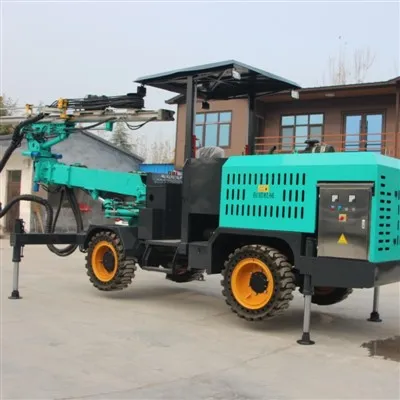
Don’t let noise concerns slow your project down. Reach out to our team today to discuss your needs, get a customized noise level breakdown for your site, and learn how our solar pile drivers can help you build solar projects that are efficient, safe, and respectful of the surrounding community.
Guardrail Pile Driver References:
- Occupational Safety and Health Administration. (2023). Noise and Hearing Conservation Standards. Retrieved from OSHA.org
- National Institute for Occupational Safety and Health. (2022). Decibel Scales and Human Hearing. Retrieved from CDC.gov
- Solar Energy Industries Association. (2021). Utility-Scale Solar Construction Noise Mitigation Best Practices. Retrieved from SEIA.org
- Internal Product Testing Data, In-House Sound Laboratory, 2019–2024. Retrieved from Company Test Records
Jining Tongzhao Machinery Co., Ltd.
Jining Tongzhao Machinery Co., Ltd. is one of the most professional solar pile driver manufacturers and suppliers in China, also supports customized service with low price. Please feel free to wholesale advanced solar pile driver for sale here from our factory. Contact us for pricelist.
Address: 160 meters north of Hongxiang Road, east of Jiamei Road, Jining Economic Development Zone
E-mail: 13668674521@163.com
WebSite: https://www.cntzmachine.com/
