Hey there! I’m from a plastic profiles machine supply team, and today I wanna chat about the feeding system of a plastic profiles machine. It’s a key part of the whole setup, and understanding it can really help you get the most out of your machine. Plastic Profiles Machine
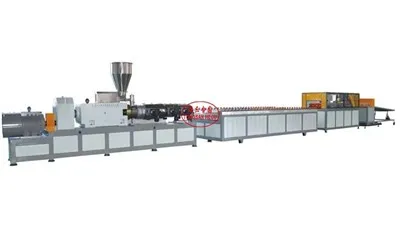
First off, let’s talk about why the feeding system matters. In a plastic profiles machine, the feeding system is like the heart. It’s responsible for getting the raw materials into the machine at the right time, in the right amount, and in the right condition. If the feeding system isn’t working well, it can mess up the whole production process. It could lead to uneven profiles, poor quality products, or even machine breakdowns.
There are a few different types of feeding systems commonly used in plastic profiles machines. One of the most basic ones is the gravity – fed system. This is pretty simple. The raw plastic materials, usually in the form of pellets or powder, are stored in a hopper. Gravity pulls the materials down from the hopper into the machine. It’s a cost – effective option, and it works well for some applications where a constant and relatively slow feed rate is okay.
But here’s the thing with gravity – fed systems. They’re not always super precise. The flow rate can be affected by things like the shape and size of the pellets, and the level of the material in the hopper. If the hopper gets too low, the flow might slow down or even stop. And if the pellets clump together, it can cause blockages.
So, for more precise and consistent feeding, we often use volumetric feeders. These feeders measure the volume of the material that’s being fed into the machine. They usually have a rotating screw or a vibrating tray that moves the material forward at a set rate. Volumetric feeders are great because they can give you a more consistent flow of materials. They’re adjustable, too. You can change the speed of the screw or the vibration of the tray to control how much material goes into the machine.
But volumetric feeders have their limits, too. The weight of the materials can vary, even if the volume is the same. So, for applications where the exact amount of material by weight is crucial, we have gravimetric feeders. Gravimetric feeders work by weighing the material as it’s being fed. They use load cells to measure the weight, and then they adjust the feed rate accordingly. This means you can get a very accurate and consistent amount of material going into the machine every time.
Now, let’s talk about the components of a typical feeding system. The hopper is where it all starts. It needs to be big enough to hold an adequate supply of raw materials, but not so big that it becomes difficult to manage. The hopper should also have a proper design to prevent material bridging or rat – holing. Bridging is when the material forms a bridge over the opening of the hopper, blocking the flow. Rat – holing is when the material forms a tunnel in the hopper, and only the material in the tunnel flows out.
Next up, we have the feeder mechanism. Whether it’s a screw, a conveyor belt, or a vibrating tray, the feeder mechanism has to be reliable. It needs to be made of high – quality materials that can withstand the wear and tear of moving plastic materials. And it should be easy to clean and maintain. If there’s any residue left in the feeder mechanism, it can contaminate the next batch of materials.
Then there’s the control system. This is what allows you to set the feed rate, monitor the performance of the feeding system, and make adjustments as needed. The control system can be as simple as a basic switch, or it can be a sophisticated computer – based system with touch – screen interfaces. A good control system gives you real – time information about the feeding process, so you can catch any issues early on.
In addition to these main components, there are often some additional features in a feeding system. For example, some feeding systems have a pre – drying unit. This is especially important for certain types of plastics that absorb moisture easily. If the plastic has too much moisture in it, it can cause problems like bubbles or poor adhesion in the final product. The pre – drying unit can remove the moisture before the material enters the machine.
Another feature is the mixing unit. Sometimes, you might need to mix different types of plastics or additives together. The mixing unit can blend these materials evenly before they’re fed into the machine. This ensures that the final plastic profile has the right properties.
Now, I know what you’re thinking. "This all sounds great, but how do I know which feeding system is right for my plastic profiles machine?" Well, it depends on a few factors. First, think about the type of plastic you’re using. Different plastics have different properties, and some might require a more precise feeding system. If you’re working with high – end plastics that need exact amounts of material, a gravimetric feeder might be the way to go.
The production rate is also important. If you’re running a high – volume production line, you’ll need a feeding system that can keep up. You might need a bigger hopper and a more powerful feeder mechanism. And if you’re making different types of profiles, you’ll want a feeding system that’s flexible and easy to adjust.
At our company, we’ve been in the plastic profiles machine business for a long time. We’ve seen all kinds of feeding systems in action, and we know what works and what doesn’t. We can help you choose the right feeding system for your specific needs. Whether you’re a small – scale operation looking for a simple and affordable solution or a large – scale manufacturer in need of a high – tech, precision feeding system, we’ve got you covered.
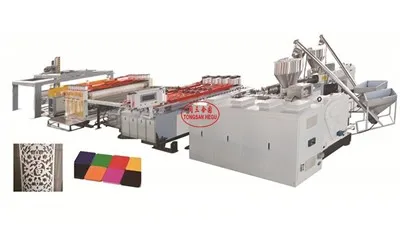
If you’re interested in learning more about our plastic profiles machines and their feeding systems, or if you’re looking to make a purchase, don’t hesitate to get in touch with us. We’re here to answer all your questions and help you find the perfect solution for your business.
Double Wall Corrugated Pipe Machine References:
- "Plastics Processing Machinery Handbook"
- Industry – specific trade magazines on plastic manufacturing
Qingdao Tongsanhegu Plastic Machinery Manufacturing Co., Ltd.
Address: West of Xixinzhi Village, Sanlihe District Jiaozhou, Qingdao City, Shandong Province, China
E-mail: info@tongsanhegu.com
WebSite: https://www.tongsanhegumachine.com/
