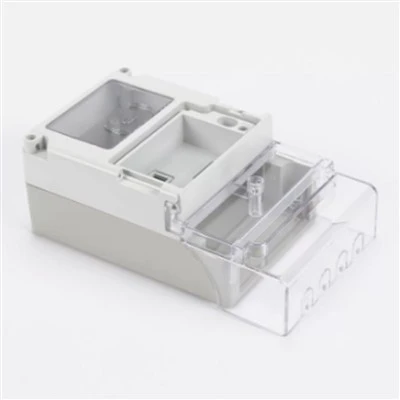
As a supplier of injection molded parts, understanding and effectively improving the wear resistance of these parts is crucial for ensuring high – quality products and customer satisfaction. In this blog, I’ll share several ways to enhance the wear resistance of injection molded parts based on my years of experience in the industry. Injection Molded Parts
1. Material Selection
The choice of material fundamentally impacts the wear resistance of injection molded parts. Different polymers come with varying degrees of abrasion – resistance capabilities.
Engineering Plastics
Engineering plastics such as polyamide (PA), also known as nylon, and polyoxymethylene (POM) are well – known for their excellent wear resistance. Nylon has a self – lubricating property, which reduces friction between the part and the contacting surface. This property is especially beneficial in applications where the part is in constant motion against another object, like gears or bearings. POM, on the other hand, has a high stiffness and low coefficient of friction, making it suitable for parts that need to withstand repeated sliding and rubbing.
Filled Polymers
Adding fillers to polymers can significantly improve their wear resistance. For example, glass fibers are commonly used as fillers. They increase the stiffness of the polymer matrix, reducing the deformation of the part under load and thus improving its wear resistance. Carbon fibers are another excellent choice. They not only enhance the mechanical strength and stiffness but also contribute to the self – lubrication of the material, further reducing wear.
Thermoplastic Elastomers (TPEs) with High Wear Resistance
Some TPEs are specifically formulated to have good wear properties. These materials combine the elasticity of rubber with the processing ease of thermoplastics. In applications where a part needs to have both flexibility and wear resistance, such as seals or gaskets, high – performance TPEs can be a great option.
2. Mold Design Optimization
The design of the injection mold has a profound influence on the final properties of the molded parts, including wear resistance.
Proper Wall Thickness Distribution
Ensuring a uniform wall thickness in the part is essential. Uneven wall thickness can lead to different cooling rates during the injection – molding process, resulting in internal stresses and warping. These defects can affect the surface finish and overall mechanical properties of the part, ultimately reducing its wear resistance. By designing the mold to achieve a consistent wall thickness, we can produce parts with better structural integrity and wear – resistant properties.
Gate Design
The location and design of the gates in the mold play a vital role. The gate is the entry point for the molten plastic into the mold cavity. A well – designed gate can ensure that the plastic flows smoothly and evenly throughout the cavity, minimizing the possibility of weld lines and air traps. Weld lines can be weak points in the part, making it more susceptible to wear. By carefully selecting the gate size, shape, and position, we can improve the overall quality of the molded part and enhance its wear resistance.
Surface Finish of the Mold Cavity
The surface finish of the mold cavity directly affects the surface finish of the molded part. A smooth mold cavity surface will result in a smoother surface on the part. A smooth surface reduces friction during contact with other objects, which in turn improves wear resistance. Additionally, a well – polished mold cavity can also prevent the adhesion of plastic to the mold during the ejection process, further ensuring the surface quality of the part.
3. Process Parameter Control
Precise control of the injection – molding process parameters is critical for achieving high – quality and wear – resistant parts.
Injection Temperature
The injection temperature affects the viscosity of the molten plastic. If the temperature is too low, the plastic may not flow properly, leading to incomplete filling of the mold cavity and poor surface finish. On the other hand, if the temperature is too high, the polymer may degrade, which can reduce the mechanical properties and wear resistance of the part. Therefore, it is necessary to find the optimal injection temperature based on the type of plastic being used.
Injection Pressure and Speed
Injection pressure and speed determine how the molten plastic fills the mold cavity. A proper balance between pressure and speed is required to ensure that the plastic fills the cavity completely without causing excessive shear stress. High shear stress can lead to molecular orientation in the part, which may affect its wear resistance. By adjusting the injection pressure and speed appropriately, we can produce parts with a more uniform microstructure and better wear properties.
Cooling Time
The cooling time in the mold has a significant impact on the part’s properties. Insufficient cooling time can cause the part to deform during ejection, while excessive cooling time can increase the cycle time and production cost. A well – controlled cooling process ensures that the part reaches its optimal hardness and dimensional stability, which are important factors for wear resistance.
4. Surface Treatment
Applying surface treatments to the injection molded parts can further enhance their wear resistance.
Coating
There are various types of coatings that can be applied to the surface of the parts. For example, a hard – chrome coating can provide a very hard and wear – resistant surface. This type of coating is often used in applications where the part is subject to high – pressure and high – speed contact. Another option is a PTFE (polytetrafluoroethylene) coating, which has a low coefficient of friction and can reduce wear by minimizing the frictional forces between the part and the contacting surface.
Plasma Treatment
Plasma treatment is a surface – modification technique that can improve the surface energy and adhesion properties of the part. By treating the surface with plasma, we can create a more reactive surface, which can then be further enhanced with other coatings or treatments. Plasma treatment can also improve the wettability of the surface, allowing for better adhesion of lubricants, which can reduce wear.
5. Post – Molding Processing
Some post – molding processes can be used to improve the wear resistance of injection molded parts.
Annealing
Annealing is a heat – treatment process that can relieve internal stresses in the part and improve its crystallinity. For semi – crystalline polymers, annealing can increase the degree of crystallinity, which in turn enhances the mechanical properties and wear resistance of the part. By annealing the part at a specific temperature for a certain period of time, we can optimize its structure and performance.
Machining
In some cases, machining the molded part after the injection – molding process can improve its wear resistance. Machining can be used to achieve a more precise dimensional tolerance and a better surface finish. For example, grinding or polishing the part can remove any surface irregularities and create a smoother surface, reducing friction and wear.
In conclusion, improving the wear resistance of injection molded parts is a multi – faceted task that involves material selection, mold design optimization, process parameter control, surface treatment, and post – molding processing. By carefully considering and implementing these methods, we can produce high – quality injection molded parts with excellent wear – resistant properties.
If you are in search of high – quality injection molded parts with superior wear resistance, I invite you to reach out for a procurement discussion. We are committed to providing you with the best solutions tailored to your specific needs.
Plastic Household Items References
- "Injection Molding Handbook" by O. Olajide
- "Plastics Materials and Processing" by James F. Carley
- "Surface Engineering for Wear Resistance" by K. C. Ludema
Yongkang Shunjiang Plastic Products Co., Ltd.
As one of the most professional injection molded parts manufacturers and suppliers in China, we offer a wide range of products with superior quality. Please feel free to wholesale bulk customized injection molded parts from our factory. Also, pricelist is available.
Address: Kangzhuang Road, Xicheng Subdistrict, Yongkang City, Zhejiang Province, China
E-mail: 15158911623@163.com
WebSite: https://www.shunjiangplas.com/
