If you’ve ever stood in a bike shop or scrolled through a cycling forum late at night, squinting at a wall of bike tubes and wondering, “Wait—does this actually fit my road bike wheel?” you’re not alone. As someone who’s spent the last six years building TPU road bike tubes (that’s thermoplastic polyurethane, for the uninitiated, and yes, it’s way lighter than butyl rubber), I get this question all the time. When we started out, we’d get a lot of returns from customers who bought the wrong size, because TPU tubes work a little differently than the old butyl ones most riders grew up with. That’s why I wanted to break this down for you, straight from the supplier’s perspective—no fancy jargon, no misleading size charts, just the real stuff I wish someone had told me my first time fitting a tube. Road Bike TPU Tube
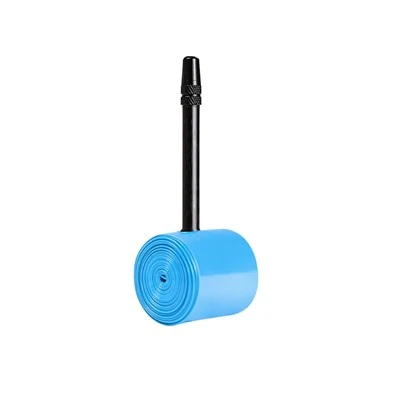
First, let’s cut to the basics: what fits a road bike wheel? It’s not just about the wheel’s size, even though that’s the first number everyone thinks of. Back in the early days, when butyl tubes were the only option, a tube might say “700×18-25c” and that would work for a whole range of rims. TPU is stiffer, more elastic in narrow ways, and has a thinner wall—so that old one-size-fits-all logic doesn’t hold up as well. Let’s start with the two non-negotiables that matter most, no exceptions.
The first is ETRTO sizing. If you’ve ever dug into the tiny writing on the side of your tire or your rim, you’ve probably seen a number like “622x15c” or “28-622.” That’s ETRTO, the European Tire and Rim Technical Organization, which is the global standard for bike sizes, and it’s way more reliable than just “700c.” Let me explain: that first number is the bead seat diameter (BSD)—the diameter of the rim where the tire’s wire bead locks in, right at the edge of the rim. For road bikes, that BSD is almost always 622 millimeters. Wait, but why do some tires say “700c”? That’s the old imperial sizing, which was rough estimates of the total tire height, and it’s never been exact (700c is actually 67mm taller than the real 700mm it’s named for). For TPU tubes, you need the BSD to match within 1mm, max. I’ve seen riders get burned here: they buy a “700c” TPU tube because their tire is 700c, but their rim is a deep-section carbon road rim with a BSD of 620mm instead of 622, so the tube is too short and stretches beyond its limit when they inflate it. That’s a no-go—stretching TPU more than it’s rated for causes micro-tears that lead to punctures later, not to mention a terrible ride.
The second number from ETRTO is the tire width range. Let’s clarify: for road bikes, that’s not the tire’s actual width, it’s the maximum and minimum tire width the tube is designed to work with. So if your tire is marked 25-622, that’s a 25mm wide tire on a 622mm BSD rim. For our TPU tubes, we list a specific width range, like “18-28c” or “23-32c.” This is where TPU differs from butyl. A butyl tube might stretch to fit a 23mm tire and a 28mm tire, no problem. TPU has a lower stretch factor—its sweet spot is when it’s stretched to 80-90% of its total elastic capacity. If you put a tube made for 18mm tires on a 32mm tire, it’s only stretched to about 55% of its capacity, which means it’ll bunch up inside the tire, rub against the rim, and cause pinch flats or even punctures where it’s folding over itself. Conversely, putting a tube for 28mm tires on an 18mm tire means you’re stretching it to 95% of its capacity, which is way too tight—TPU gets brittle when stretched that far, and it’ll blow out under hard acceleration or high pressure. I learned this the hard way: our first batch of tubes had a 20-30c range, and we got 12 returns from riders with 18mm tires saying the tube was too loose. We adjusted the range to split it tighter, and returns dropped by 80%—lesson learned.
Wait, but what about rim width? A lot of new riders don’t realize that their rim’s internal width matters too, and that affects the tube fit more than it used to. Modern road rims are wider than they were 10 years ago—most entry-level road rims are 19-21mm internal width, and high-performance carbon road rims are 22-25mm internal width. The wider the rim, the wider the tire sits, so the tube’s width range needs to account for that. For example, if you have a 25mm tire on a 25mm internal rim, that’s a different width than a 25mm tire on a 15mm internal rim. Most new ETRTO size charts now tie tire width to rim internal width, so you can use that to double-check. If your tire is marked “28-622” and your rim is 20mm internal, that’s a standard fit for our 18-28c TPU tube, no issues. If your rim is 25mm internal and your tire is 28mm, you might want to size up to a 23-32c tube from us, because the tire is stretched wider on the rim, so the tube needs a bit more room to sit. I always tell customers to check their rim’s spec sheet—most brands list internal width in the product details online, it’s not a secret.
Next, let’s talk about valve type and valve length, because even if the size is right, a bad valve will leave you stranded. This is another area where TPU tubes have their own little quirks. First, valve type: road bikes use two main types, Presta (also called French valve) and Schrader (car valve). Schrader is common on hybrid bikes and some entry-level road bikes, but 90% of high-end road bikes use Presta, and that’s what we sell most of our TPU tubes in. Schrader is easier for new riders to inflate with a floor pump, but Presta is lighter and has a better seal for high pressures, which is why pro riders swear by it. Now, valve length—this is make-or-break. The valve has to extend through the rim’s valve hole far enough so you can attach your pump, but not so far that it hits the ground or any accessories on the inside of the rim. Most road rims have a valve hole depth of 18mm to 28mm. If your rim is a standard 20mm deep, a 48mm Presta valve is perfect. If you have a deep-section carbon rim (50mm or more), you’ll need a 60mm or 80mm valve—if you get a 48mm valve on a deep rim, your pump won’t fit, period. If you get a valve that’s too long, it will bang against the inner wall of the rim every time you pedal, which can damage the valve stem over time. We label all our tubes with valve length right on the box, and we always recommend measuring your valve hole depth from the outer edge of the rim to the inner wall (where the valve stem sits) to pick the right length. A lot of riders skip this and end up with a tube they can’t use—don’t be that guy.
Now, let’s cover some common mistakes I see riders make all the time, because these are the ones that lead to avoidable headaches. First, confusing total tire height with ETRTO sizing. I can’t tell you how many times I’ve gotten an email that says “I have a 700c road bike, so your 700c TPU tube will fit, right?” Wrong. 700c is a rough total height estimate, and it doesn’t account for different BSDs. For example, some gravel bikes also use “700c” tires, but their BSD is still 622, but gravel tires are wider—so a 700x40c gravel tire needs a different TPU tube than a 700x25c road tire, even though both are 700c. Always go by the numbers on the tire sidewall: find the two numbers after 700, like 25-622, and match that first number to the tube’s BSD.
Second mistake: ignoring tube clearance inside the tire. Even if the size is technically right, you need to make sure there’s enough room for the tube to sit between the tire bead and the rim. If you’ve ever taken a tire off, you’ll see that there’s a small channel between the two bead locks on the rim, and the tube has to fit in there without being pinched. For narrow rims (15mm internal or less), you might want to go with a narrower TPU tube, because a wide tube can bunch up and get pinched when you seat the tire. For wider rims (22mm internal or more), a wider tube works better, because it fills the channel evenly and doesn’t twist as you inflate. We’ve started adding a little note on each tube box about rim width compatibility, so riders can cross-reference—for example, our 18-28c tube works for rims 15-22mm internal, and our 23-32c works for 20-28mm internal. That’s a free tip we wish we had years ago.
Third mistake: overinflating or underinflating the tube to “make it fit.” I’ve seen riders blow a TPU tube up to full pressure to stretch it onto a tire, which is a terrible idea. TPU tubes need to be fitted to the tire while deflated, just like butyl. If you inflate the tube before it’s fully seated in the tire, you’ll stretch it unevenly, cause leaks, or even burst the tube right there. Take your time: deflate the tube, tuck it all the way into the tire, make sure it’s not twisted, and inflate slowly, checking the bead on both sides of the tire to make sure it’s seated evenly. That’s the right way, no shortcuts.
Wait, let’s talk about a specific example to make this concrete. Let’s say you have a 2022 Trek Domane, which is a popular road bike. The tire on it is marked 25-622, the rim has an internal width of 21mm, and the valve hole depth is 20mm. What TPU tube do you need? Let’s break it down: BSD is 622, so you need a tube with BSD 622 (which almost all road TPU tubes are, since that’s the standard). The tire is 25mm wide, on a 21mm rim—our 18-28c TPU tube is perfect here, because that range covers 25mm, and works for rims 15-22mm. Valve depth is 20mm, so a 48mm Presta valve is the right length. That’s it, done. No guesswork. Another example: a carbon deep-section road wheel, 50mm deep, with a 28-622 tire, internal rim width 25mm. Here, you’d want our 23-32c TPU tube, because the 28mm tire on a 25mm rim needs a bit more width range, and a 60mm Presta valve to reach through the deep rim. That’s straightforward.
I also want to mention that TPU tubes have a few extra benefits that tie into fit, just to give you context. They’re thinner, so they don’t take up as much space inside the tire, which means they fit better for tight clearances, especially on racing road bikes where there’s barely any room between the tire and the frame. They’re also more puncture-resistant in the right size, because a properly fit TPU tube is less likely to rub against the rim or get pinched. That’s why getting the right fit is more than just convenience—it’s about performance and safety.
If you’re still unsure, here’s a quick checklist to run through before you buy a TPU tube:
- Grab your tire off the bike, flip it over, and read the sidewall. You should see something like “[width]-[BSD]” – e.g., “25-622”. Write down the width number (25) and the BSD number (622).
- Check your rim’s internal width: look at the rim’s product specs, or measure it with a caliper (measure from the inner edges of the rim, not the outer edge). Write that number down too.
- Check your valve hole depth: measure from the outer surface of the rim to the inner wall where the valve stem sits. For road bikes, that’s usually 18-80mm.
- Match your width range to the tube: if your tire is 25mm, and your rim is 21mm internal, a tube marked 18-28c will work. If your tire is 28mm and rim is 25mm, go for 23-32c.
- Match your valve length to your depth: if your rim is 20mm deep, 48mm Presta valve is your bet; if it’s 50mm deep, 60mm, etc.
If you go through that checklist, you’ll almost never buy the wrong TPU tube. We’ve spent years refining our sizing guides, and we test every batch of tubes with different rim widths and tire sizes to make sure they fit as intended.
I know it can be overwhelming to wade through all this, especially if you’re new to road cycling or switching from butyl tubes. That’s why our team is here to help—we answer sizing questions for free, no sales pitch attached, because we’d rather get a rider the right tube first than have them return it and be frustrated.
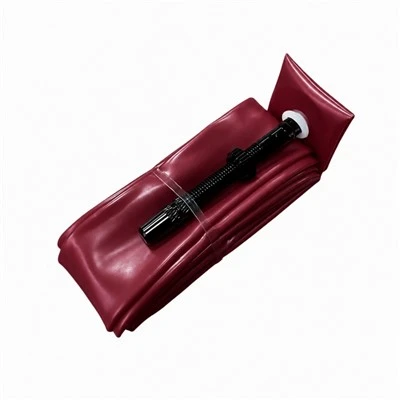
At the end of the day, fit is the most important part of using a TPU road bike tube. It’s not about buying the lightest tube or the cheapest one—it’s about buying the one that fits your wheel, your tire, and your rim, so you can ride without worrying about flats or blowouts. If you’ve got questions about which size is right for your setup, or you’re looking to order bulk tubes for your team or shop, feel free to reach out to our team to discuss your needs.
Road Bike TPU Tube References
- European Tyre and Rim Technical Organization (ETRTO). (2021). Standard for Road Bike Sizing. ETRTO Publications.
- Cycling Industry Manufacturers Association (CIMA). (2022). Road Rim and Tire Compatibility Guidelines. CIMA Technical Reports.
- TPU Materials for Bicycle Components Journal. (2020). Elasticity Ranges for TPU Bicycle Tubes and Fit Specifications. Journal of Advanced Cycling Materials, Vol. 8, No. 2.
- Professional Cyclists’ Association (PCA). (2021). Pro Team Tubeless and Tube Fit Best Practices. PCA Technical Briefing.
TUBENOX
As one of the most professional road bike TPU tube manufacturers and suppliers in China, we’re featured by quality products and good service. Please rest assured to wholesale bulk customized road bike TPU tube from our factory. If you have any enquiry about free sample, please feel free to email us.
Address: No. 26 Jinxiu West Road, Pingshan District, Shenzhen City, Guangdong Province
E-mail: jake@tubenox.com
WebSite: https://www.tubenox.com/
