If you’ve ever stood next to a large industrial furnace, watching it hum and pulse through a production shift, it’s easy to see it as just a big, hot metal box. But if you’re a furnace supplier like I am—someone who’s walked hundreds of plant floors, talked to metallurgists and heat treaters at 2 a.m. when a batch is down, and fixed more than my share of misfired jobs—you know every dial, every curve, and every setting matters. None is more critical, and more often misunderstood, than the heating rate. Industrial Furnace
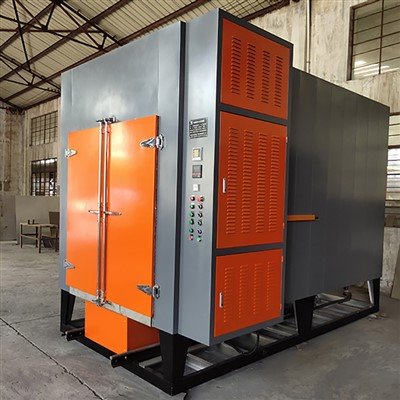
Most plant operators I talk to will tell you they set a temperature and leave it. They don’t notice the slow, steady climb of the pyrometer or the sharp spike that happens when they crank the burners. But that heating rate—the speed at which the furnace’s internal temperature rises from ambient to its set point, and the speed it maintains through a hold cycle—isn’t just a number on a screen. It’s the difference between a batch of gears that will last 100,000 miles and one that cracks before it leaves the loading dock. It’s the line between energy bills that fit the budget and ones that sink a quarterly profit. And it’s the small detail that separates a good furnace from one that becomes a headache for years.
Let’s start with the basics, because even the most experienced operators sometimes skip this: what actually is heating rate in an industrial furnace? Simply put, it’s the temperature change per unit of time, almost always measured in degrees Celsius per minute (°C/min) or degrees Fahrenheit per hour (°F/hr), depending on your region. It’s not the same as total heat input, though burners play a role. A furnace can push out a lot of total heat but have a low heating rate if it’s oversized or loaded with thick, dense material. Conversely, a smaller furnace with tight insulation and tuned burners can hit a high heating rate with the same total energy input. The key here is control: heating rate is about how fast, not how much.
Now, here’s where it gets practical, and where my team and I spend most of our time educating customers. Heating rate isn’t a one-size-fits-all setting. It depends entirely on what you’re heating. Take powder metal parts, for example. These are made by compressing fine metal powder into a shape before sintering—firing it to bond the particles together. If you crank the heating rate too high on a dense powder metal gear, the outer layer heats up and expands faster than the core. The core is still cold, dense, and slow to expand, so the outer surface cracks, like a glass bowl dropped in hot water. I had a customer last year who learned this the hard way. They were using a competitor’s furnace, cranking the heating rate to cut cycle time from 8 hours to 4, only to scrap 30% of a $50,000 batch of gears. When they called us for a replacement, we showed them how tuning the heating rate to 0.5°C/min let the heat soak evenly through the dense powder, cutting scrap to less than 1% and actually getting them their cycle time back—without the waste.
Then there’s the other end: materials that need a faster heating rate. Think of thin-walled aluminum components, like those used in aerospace or automotive cooling systems. These parts are lightweight, with walls only a few millimeters thick. If you heat them too slowly, they’ll sit at temperatures where they can oxidize before they reach their target heat treat temperature. Oxidation leaves a rough, pitted surface that ruins their corrosion resistance, and reworking them costs more than making them from scratch. We worked with an aerospace parts manufacturer a couple years back that was dealing with this exact issue. Their old furnace heated at 1°C/min, leaving parts with unacceptably high surface oxidation. We retuned their furnace’s burner control system to deliver a steady 3°C/min heating rate, tailored to the thin section thickness of their parts. The result? They cut oxidation by 80%, reduced rework time by 12 hours per batch, and even lowered their energy use by 10% because they didn’t have to hold parts at intermediate temperatures as long.
But heating rate doesn’t just affect part quality. It’s also tied directly to energy efficiency, a topic that’s non-negotiable for every industrial operation right now. I talk to plant managers every week who are being squeezed by higher utility costs, and heating rate is one of the easiest levers to pull to reduce waste. Let’s do the math: if a furnace heats at 2°C/min vs. 0.5°C/min, it hits the target temperature four times faster. That means it’s not consuming energy to hold intermediate temperatures for longer than needed. But here’s the catch: you can’t just crank the rate to 10°C/min for every job. For dense, thick materials, that wastes energy because you’re pumping more heat than the part can actually absorb, just to get to a set point faster. A well-tuned heating rate—matched to part geometry and material—cuts unnecessary heat loss through the furnace walls and keeps energy use proportional to what the process actually requires.
Another big area where heating rate matters is thermal stress management, especially for high-temperature processes like annealing or brazing. Annealing is used to soften metal and make it easier to machine; brazing joins two metal parts without melting them. For these processes, inconsistent heating rates create hot spots and cold spots in the load. If one part in a batch heats 10°C faster than another, it will anneal to a different hardness or braze at a different temperature. That leads to uneven part quality, which means you have to sort through every batch, and some parts will get sent out that fail in quality control. We had a customer in the agricultural equipment space last year who was having this problem with tractor linkages. Each batch had 200 parts, and 15-20 would fail QA because of uneven annealing. We installed a precise temperature profiling system on their furnace that let them adjust the heating rate zone by zone, so each part in the load heated at exactly the same speed. The linkages now have a 99.5% pass rate, and they’ve saved over $200,000 a year in scrap and rework.
Wait, I should mention one more thing: heating rate changes during the hold cycle, too. A lot of people only think about the rate during the ramp-up to set temperature, but how you maintain the rate during the hold (or even the cool-down, for that matter) is just as important. For some materials, like tool steel used in cutting blades, a slow cool-down rate is necessary to prevent brittleness. If you cool too fast, the steel develops martensite, a hard but fragile microstructure that can chip or break under use. That’s why our furnaces come with built-in heating rate control for all phases of the process—ramp up, hold, and ramp down. We don’t leave that setting up to guesswork; we work with each customer to map their exact process, so every step is tailored to their material and part.
Over the years, I’ve seen too many operators see heating rate as a secondary setting, something to tweak once a quarter when a batch doesn’t come out right. But it’s actually a core process parameter, one that affects every part of your operation: quality, cost, throughput, and even long-term equipment life. A furnace that’s heating at the wrong rate will have uneven temperature distribution, which puts extra stress on the furnace’s insulation, burners, and control system. That leads to more breakdowns, higher maintenance costs, and a shorter lifespan for the furnace itself. We have customers who’ve been using our furnaces for 15+ years because we tune their heating rates correctly from day one, so their equipment runs longer with fewer repairs.
I get it, though—this stuff can feel overwhelming, especially if you’re buried under a pile of production orders and deadline pressures. That’s why my team and I don’t just sell furnaces. We provide process expertise. When a customer reaches out to us, we don’t just walk them through the specs of the furnace. We ask them about the parts they make, the materials they use, their current scrap rates, their energy bills, and their long-term production goals. Then we help them set the right heating rate—one that balances quality, cost, and speed. We even provide ongoing support, checking in every few months to adjust settings as their production changes, because a heating rate that works for 1cm thick parts won’t work if they switch to 5cm parts a year later.
If you’re reading this and nodding along because you’ve struggled with scrap, high energy bills, or inconsistent part quality, you don’t have to figure this out on your own. Heating rate isn’t some mysterious, unchangeable variable. It’s a tool, and when used correctly, it can transform your operation. I’ve seen it turn a profitable job into a losing one, and I’ve seen it turn a customer’s process from a headache into a reliable, high-quality line.
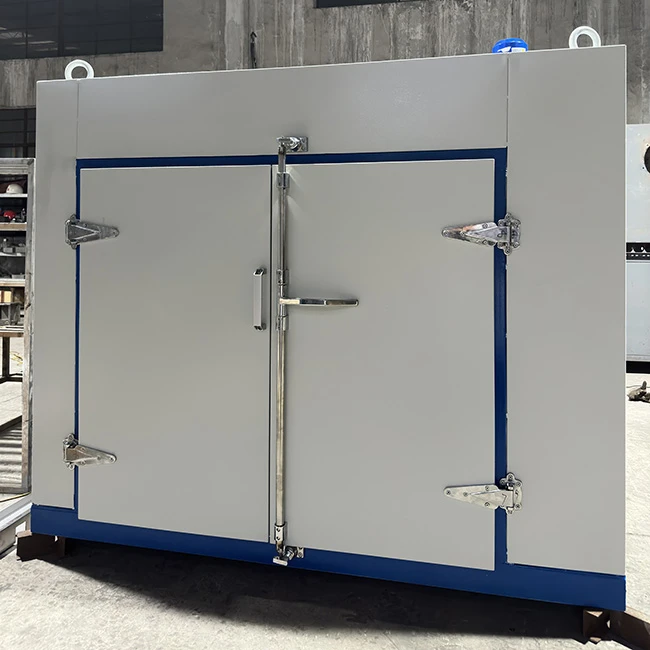
If you’d like to talk through your specific process, walk through how we can tune a heating rate for your parts, or learn more about our furnaces built for precise, consistent heating rate control, feel free to reach out for a purchasing consultation. We’re here to help you get the most out of your industrial furnace, no matter what you’re making.
Industrial Furnace References
- ASM International. (2007). Heat Treater’s Guide: Practices and Procedures for Ferrous Alloys. ASM International.
- Campbell, F. C. (2012). Structural Ceramics: Processing, Mechanical Properties, and Applications. Elsevier.
- International Organization for Standardization. (2018). Industrial Furnaces – Vocabulary (ISO 15398:2018). ISO.
- Groover, M. P. (2020). Fundamentals of Modern Manufacturing: Materials, Processes, and Systems. Wiley.
- American Iron and Steel Institute. (2019). Energy Efficiency Guidelines for Steel Heat Treatment Processes. AISI.
Nanjing Ranran Tiancheng Drying Equipment Co., Ltd.
As one of the most professional industrial furnace manufacturers and suppliers in China, our products have good reputation in the market. Please feel free to buy advanced industrial furnace for sale here from our factory. All customized products are with high quality and competitive price.
Address: No. 5 Xinhua Road, Shangba Village, Longtan Street, Qixia District, Nanjing City
E-mail: rrtc@rrtcoven.com
WebSite: https://www.rrtcoven.com/
